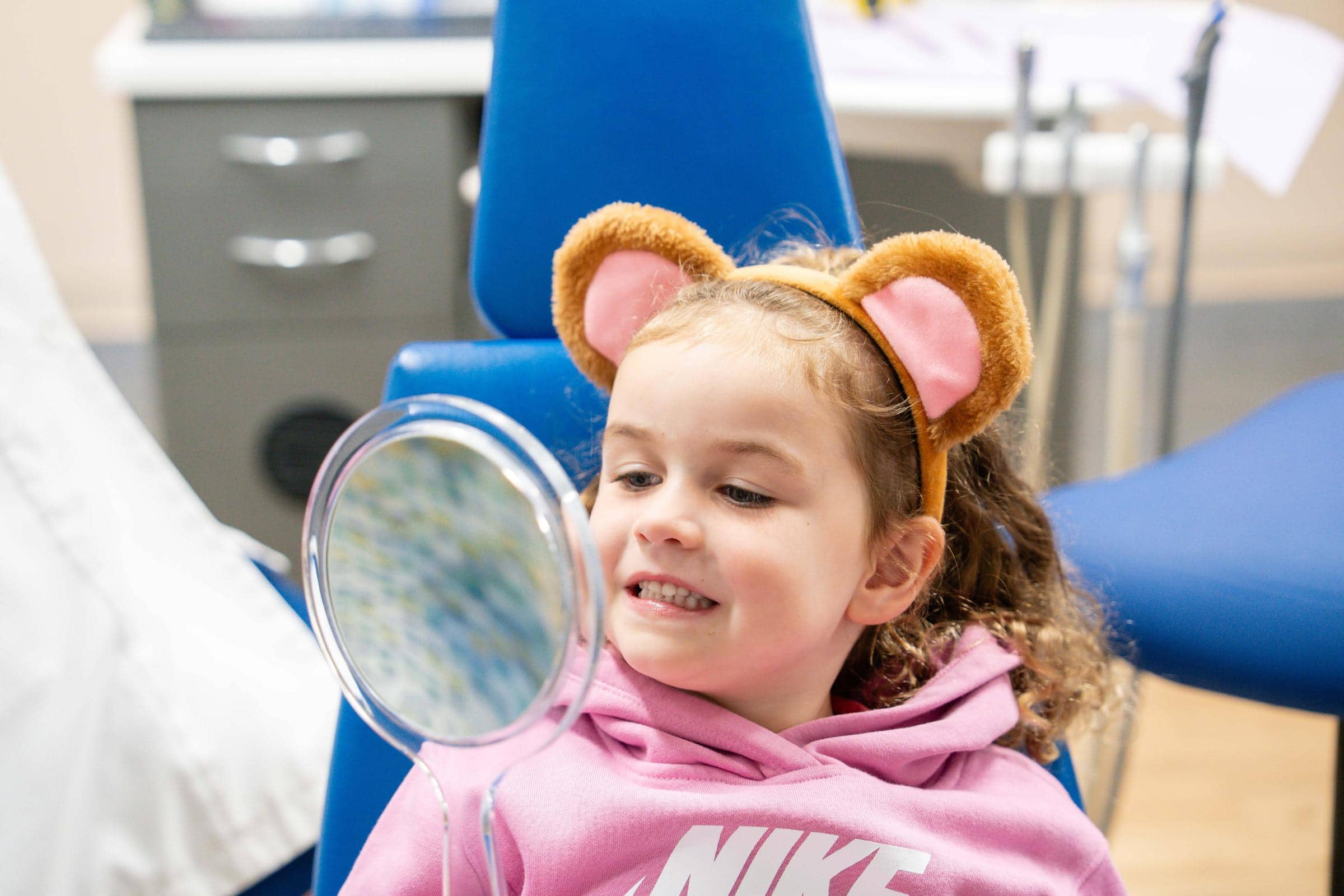
When should my child first see an orthodontist? The American Association of Orthodontists recommends a first orthodontic checkup by age 7. By this age, your child’s first permanent molars and front incisors have usually come in, giving our doctors a clear picture of how the bite and jaw are developing. Many kids won’t need treatment yet, but an early checkup helps catch issues sooner.
At Coppe + Sears in Lexington, MA, these first visits are about screening and monitoring, not always immediate braces. Think of it as a baseline visit. Our Lexington orthodontists, Dr. Sears and Dr. Donovan, look for crowding, spacing concerns, or bite irregularities that could become bigger challenges later. If everything looks great, we’ll simply check in periodically as your child grows. When we spot something worth addressing, we’ll explain your options in plain language.
When Should My Child First See an Orthodontist for a Checkup?
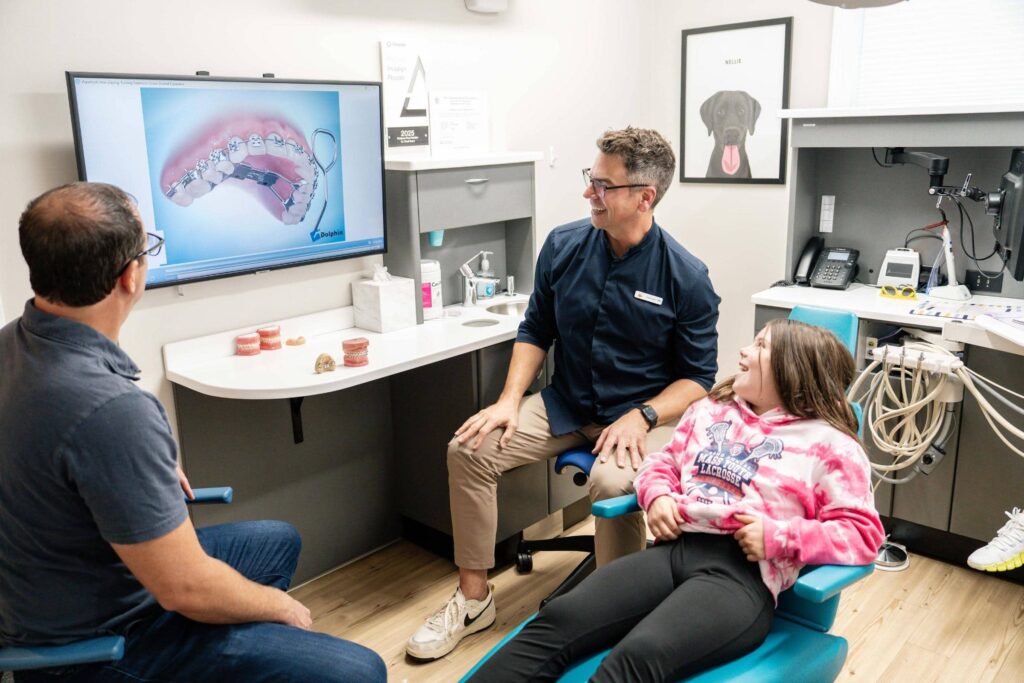
The first orthodontic visit at Coppe + Sears is quick, comfortable, and informative. Our orthodontist performs a visual exam of your child’s teeth and bite, takes digital X-rays to view developing teeth under the gums, and discusses jaw growth patterns. From there, we recommend either continued monitoring or early treatment. The first visit typically takes 30 to 45 minutes.
Here’s what your child can expect, step by step:
- Visual exam. Our orthodontist looks at the teeth, jaw alignment, and how the upper and lower teeth meet.
- Digital X-rays. These low-radiation images show us teeth that haven’t erupted yet and how the jaw is forming.
- Growth discussion. We’ll review your child’s dental development and answer any questions you’ve been holding onto.
- A recommendation that fits your child. Depending on what we see, we’ll suggest watchful waiting, Phase 1 treatment, or a follow-up visit in 6 to 12 months.
Most families leave feeling reassured rather than worried. Your first visit at Coppe + Sears is a free ortho consult, so there’s no pressure to commit to anything that day. Our doctors bring board-certified training and a kid-first approach to every smile journey, which keeps the whole experience calm for kids and parents alike.
Benefits of Early Orthodontic Evaluation
At Coppe + Sears, an early orthodontic checkup offers several clear benefits. It guides jaw growth, addresses harmful habits, protects vulnerable front teeth, simplifies later care, and improves daily function. An early checkup does more than spot crooked teeth. It gives our doctors a chance to guide your child’s growth in helpful ways, often making future care simpler and shorter.
How Does Early Evaluation Help Your Child’s Growth?
Here are some of the biggest benefits:
- Guides jaw growth. Catching narrow arches or uneven jaws early lets us create space for incoming permanent teeth.
- Addresses habits. Thumb-sucking, tongue thrusting, and mouth breathing can shift teeth over time. Early help can curb these habits before they cause lasting changes.
- Protects front teeth. Kids with protruding upper teeth are more likely to chip or injure them, so early alignment reduces that risk.
- Simplifies later care. When we guide growth now, full braces or Invisalign in the teen years often go faster and more smoothly.
- Improves daily function. Some kids chew, bite, or even speak more comfortably once alignment issues are addressed.
Why Does the Age-7 Window Matter So Much?
According to the American Association of Orthodontists (AAO), early evaluation by age 7 gives orthodontists the best chance to identify subtle problems while a child’s jaw is still growing. That early window is one of the reasons we encourage families to schedule a checkup, even when everything looks fine at home. Catching small concerns during active growth means our doctors can often work with your child’s natural development rather than against it, which can shorten the overall smile journey down the road.
Should My Child Start Early Treatment or Wait?
One of the most common questions we hear is whether to start treatment early or wait until all the adult teeth come in. The honest answer is that it depends on your child. Some kids benefit from a short round of early orthodontic treatment (Phase 1) around ages 6 to 10, while others do best with monitoring until Phase 2 begins around age 11 or older.
Here’s a quick side-by-side look:
| Feature | Phase 1 (Early Treatment) | Phase 2 (Full Treatment) |
|---|---|---|
| Typical Age | 6 to 10 years old | 11 years and older |
| Goal | Guide jaw growth, create space, correct bite issues | Align all permanent teeth into final position |
| Common Tools | Palatal expanders, partial braces, space maintainers | Full metal braces or Invisalign |
| Length | About 6 to 18 months | About 12 to 24 months |
| Best For | Growing kids with bite or spacing issues | Teens ready for full alignment |
Phase 1 isn’t right for every child, and that’s okay. For some kids, the smartest plan is simply to watch and wait. When Phase 1 is the right call, it can sometimes prevent the need for more involved treatment later. Our orthodontist will help you understand which approach fits your child’s development, and we’ll never recommend treatment your child doesn’t truly need.
What If Your Child Does Need Treatment?
If our orthodontist recommends early treatment, we’ll walk you through the plan in plain language before anything begins. Many dental plans include orthodontic benefits for children, and our team is happy to review your coverage with you so you know what to expect at each stage. Because your first visit is a free ortho consult, you can get those answers before making any decisions, with no surprises along the way.
Does Your Child Need Early Orthodontic Treatment?
Wondering whether your child might be a candidate? Some signs are easy to spot at home, while others only show up on X-rays. That’s why a checkup matters even when everything looks fine.
Common signs to watch for:
- Crowded, crooked, or widely spaced teeth
- A crossbite, overbite, or underbite
- Trouble chewing or biting
- Persistent mouth breathing or speech concerns
- Baby teeth that fall out much earlier or later than expected
- Thumb-sucking that continues past age 5
- A jaw that shifts or clicks when opening and closing
Even when you don’t notice any of these, your child could still benefit from an evaluation. Many alignment issues develop quietly, and parents often tell us they had no idea anything was off until we pointed it out. The good news is that an early checkup either confirms everything is on track or gives us a head start on guiding your child’s smile in the right direction. If you are looking for an orthodontist in Lexington, MA, you can schedule a free ortho consult with our team.
Frequently Asked Questions
Is age 7 too early for braces?
Age 7 is usually too early for braces, but it’s the right age for an orthodontic checkup. Most 7-year-olds simply need monitoring while their adult teeth come in. When treatment is needed sooner, it’s typically a short Phase 1 with a focused appliance rather than full braces.
What if we missed the age-7 visit?
It’s never too late to schedule that first checkup. Whether your child is 8, 12, or already a teen, our orthodontist can evaluate their smile and recommend the best next step. Most kids who start orthodontic care later still get wonderful results.
Will my child definitely need braces?
Not always. Plenty of kids who come in for an early checkup just need monitoring visits every 6 to 12 months. We only recommend braces or Invisalign when there’s a clear benefit, and we always explain the reasoning so you can make an informed choice.
How long does early treatment last?
Phase 1 treatment typically runs 6 to 18 months, depending on what we’re working to correct. After Phase 1, your child usually takes a break before Phase 2 begins in the teen years, once the remaining adult teeth have come in.
Does early treatment hurt?
Early treatment is usually very comfortable. Modern orthodontic appliances are well-tolerated by kids. Your child might feel some mild pressure for a day or two after adjustments, but most kids adjust quickly. And with our digital scans, there are no goopy, gaggy impressions to worry about.
Do baby teeth matter for orthodontics?
Yes, baby teeth play an important role. They hold space for the permanent teeth and help guide them into the right position. Losing baby teeth too early, or keeping them too long, can affect how the adult teeth come in. That’s another reason early checkups matter, and another reason our doctors love seeing kids while their smiles are still developing.